

A Perth family once arrived at their new home after an interstate move to find their grandmother’s crystal glassware in pieces, their television screen cracked, and a hand-painted vase reduced to shards. None of it was dropped. The road did it.
To pack fragile items for a long-distance move, wrap each item individually in bubble wrap, place it in a double-walled box with cushioning on all sides, seal every gap with packing peanuts or foam, and label the box clearly on multiple faces. Long-distance moves expose fragile belongings to hours of vibration, shifting loads, and temperature swings that short local moves never produce.
This guide covers everything you need to protect your breakables from Perth to anywhere in Australia:
- The right packing materials for long-distance transit
- Wrapping and boxing techniques that prevent breakage
- Long-distance risks most people overlook
- A printable checklist to pack without missing a step
- Insurance guidance if something does go wrong
- How to handle antiques and sentimental items safely
Why Fragile Items Break During Long-Distance Moves
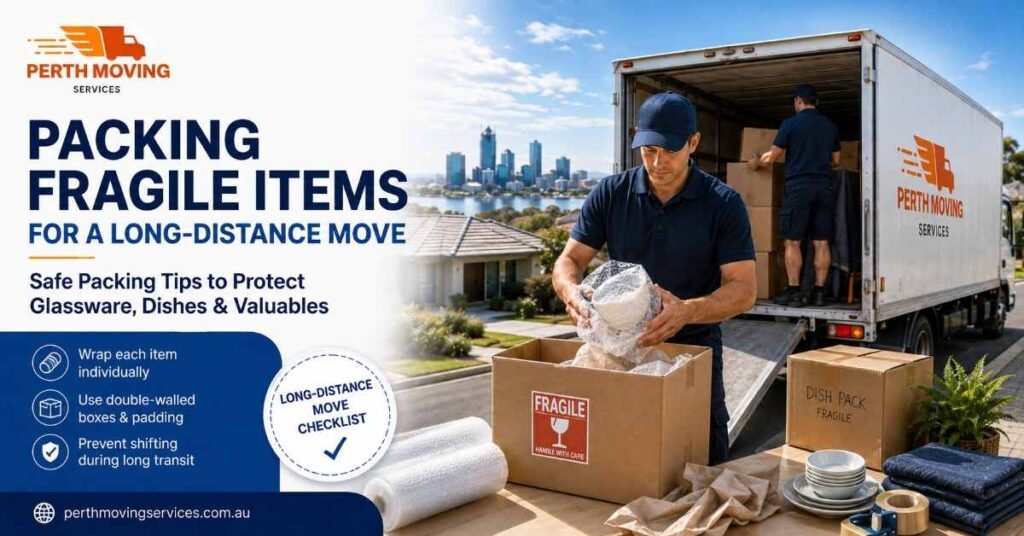
Most people assume breakage happens because a box gets dropped. In long-distance moves, the real culprit is sustained stress over time. A box that survives being loaded can still fail after eight hours on a highway.
Vibration and Road Conditions
Road vibration is one of the most underestimated forces acting on your packed boxes. Over a long route, constant low-frequency shaking causes items to work through their wrapping, press against box walls, and grind against each other. Highways between Perth and the eastern states include long stretches of uneven road surface that amplify this effect on rigid items like ceramics and stemware.
The worst outcomes happen when items shift within a box that was not packed tightly enough. A single wine glass with room to move will find the edge of the box by the time the truck reaches the Nullarbor. Tight, snug packing is the only counter to road vibration.
Temperature and Climate Changes
Western Australia’s climate adds a layer of risk that moves along the east coast do not face in the same way. Perth removals heading interstate pass through temperature zones that swing between extreme heat in the outback and cooler coastal climates. Glass, ceramics, and composite materials can expand and contract at different rates, creating micro-fractures or stress cracks that show up only after unpacking.
Electronics are especially sensitive to heat cycling. A laptop packed in a dark box sitting in a moving truck can reach temperatures that damage internal components, even if the outer casing looks fine. Climate-controlled transport or careful timing of your move dates reduces this risk.
Extended Transit Time Risks
A local Perth move might take two hours. An interstate move to Sydney or Melbourne can take several days. Every additional hour in transit multiplies the chance of shifting, vibration damage, and moisture exposure. Boxes that felt solid at the start of a journey can weaken as cardboard absorbs ambient humidity over multi-day transit.
After more than 11 years of handling interstate relocations out of Yokine and across Perth Metro, the pattern is consistent: items packed for a one-hour move and then loaded onto a long-distance truck are the ones that arrive damaged. Long-distance packing needs to be built for the full journey, not just the lift into the vehicle.
Best Materials for Packing Fragile Items
Choosing the right materials before you start packing saves money and heartbreak. Improvised substitutes like newspaper and tea towels do not perform the same as purpose-made packing supplies, especially over long distances.
Bubble Wrap and Packing Peanuts
Bubble wrap remains the most reliable single-item wrapping material for fragile objects. The air-filled chambers absorb impact and create a buffer between the item and the box wall. For long-distance moves, use at least two layers on glass and ceramics, and secure each wrap with packing tape so it cannot unroll during transit.
Packing peanuts fill the void space that bubble wrap alone cannot address. Their role is to stop items from shifting when the truck brakes or corners. Anti-static packing peanuts are the correct choice for electronics, as standard foam peanuts carry a static charge that can damage circuit boards and sensitive components.
Anti-Vibration Padding Options
Standard packing foam sheets add a second layer of protection between items and box walls. Foam-in-place bags, which expand around an object to create a custom-fitted cushion, offer the best vibration dampening available for high-value or irregularly shaped items. Cell-divided cardboard inserts, designed for glassware and bottles, hold each piece in its own compartment so contact between items is impossible.
Corrugated foam rolls are a cost-effective option for wrapping multiple items of similar shape, such as plates or small sculptures. They are thicker than bubble wrap and better suited to sustained vibration rather than single-impact protection.
Climate-Controlled Supplies
Silica gel packets placed inside boxes absorb moisture during multi-day transit. Thermal bubble wrap, which has a reflective outer layer, slows heat transfer and helps regulate the temperature inside a packed box. For artwork, antiques, and electronics, these supplies shift from optional to necessary on long-distance moves through warm Australian conditions.
Acid-free tissue paper protects surfaces that should not touch bubble wrap directly, including painted surfaces, gilded frames, and polished silver. It adds no structural cushioning but prevents surface damage that bubble wrap’s textured surface can cause on delicate finishes.
Choosing the Right Boxes for Fragile Items
The box you choose determines how much protection the wrapping inside can actually deliver. A weak box transfers external pressure directly to the contents regardless of how well each item is wrapped.
Double-Walled vs Single-Walled
Single-walled boxes work for light, short-distance packing. For fragile items on a long-distance move, double-walled cardboard boxes are the correct choice. The two layers of corrugated cardboard distribute external weight and resist compression when boxes are stacked, which they will be in a moving truck for hours at a time.
Purpose-made “dish packs” and glass boxes are double-walled and taller than standard boxes, giving enough vertical clearance to stack plates on their edges, which is the structurally safer orientation for ceramic dishware. These specialty boxes cost more than standard cartons but protect items that cost far more to replace.
Size Guidelines by Item Type
Box size should match the weight and fragility of the contents. Heavier fragile items such as full dinner sets and large vases need smaller boxes so the total weight stays manageable and the structural integrity of the cardboard is not compromised by overfilling.
- Small boxes (1.5 cubic feet): Individual stemware, figurines, small ceramics, single framed photos
- Medium boxes (3 cubic feet): Stacked plates, bowls, small appliances, books with breakable spines
- Large dish packs: Full dinner sets, mixing bowls, large serving pieces
- Custom crates: Mirrors, large artwork, antiques, flat-screen televisions
Never fill a box until it bulges. A box that cannot close flat at the top cannot be stacked safely and will collapse under load during transit.
Step-by-Step Packing Guide for Fragile Items
Good packing follows a sequence. Skipping steps to save time is where most breakage originates.
Individual Wrapping Techniques
Start every item from scratch, wrapping it as if it is the only thing in the box. Place the item at the corner of a bubble wrap sheet, roll it diagonally, and tuck the ends inward before taping. For stemware, wrap the stem separately in a single layer of foam before rolling the whole glass in bubble wrap. Fragile handles on mugs and teapots need their own wrap before the body of the item gets its layer.
Plates should always be wrapped individually even when packing multiples. Stack no more than five wrapped plates together, and pack them vertically on their edges rather than flat. The edge-standing position distributes load along the plate’s strongest axis and reduces the chance of cracking under the weight of items stacked above.
Preventing Empty Space and Shifting
Once wrapped items are placed in the box, fill every remaining void. Use packing peanuts, crumpled packing paper, or foam offcuts to eliminate all movement. Shake the closed box gently before sealing it. If you hear or feel anything shift inside, open it and add more fill material.
Line the bottom of every fragile box with at least 7 to 10 centimetres of cushioning before the first item goes in. Add a layer of cushioning between each tier of packed items. The top layer needs the same depth of fill as the bottom so the lid does not press directly onto the contents when the box is stacked.
Labeling Fragile Boxes
Label every face of the box, not just the top. Write “FRAGILE” and “THIS SIDE UP” in large, clear letters using a permanent marker or pre-printed fragile tape. Add a brief description of contents on one side so the box can be prioritised during unloading without opening it.
A second useful label is the room destination combined with a handling note: “KITCHEN, GLASSWARE, DO NOT STACK ABOVE 2 BOXES.” Removalists working a full truck load process many boxes quickly, and clear labeling on multiple faces reduces the chance of a fragile box ending up under heavy items.
How to Pack Fragile Kitchen Items
The kitchen produces more breakage than any other room in a long-distance move. Glass, ceramic, and porcelain items share space in cupboards without issue but need careful separation in transit.
Glassware and Dishes
Wrap each glass individually starting at the base. Use cell-divided cardboard inserts where possible, as these prevent any contact between glasses and eliminate the grinding vibration damage that causes invisible rim chips. Pack glasses upside down in their cells so any downward pressure during transit acts on the stronger base rather than the rim.
Packing glass items for moving requires the same individual wrap approach regardless of how plain or inexpensive the glass is. One unprotected drinking glass can damage five wrapped ones it presses against over a long journey. Dishes, bowls, and side plates follow the same edge-standing rule: wrapped individually, grouped in fives or fewer, and packed vertically.
Pots, Pans and Appliances
Non-fragile pots and pans still require thoughtful packing when they share a box with anything breakable. Cast iron and heavy pans should never go in the same box as ceramic or glass items. Pack heavy cookware separately in reinforced boxes with their own protective layering to prevent them from shifting into fragile cargo if the truck brakes hard.
Small appliances with glass components, such as blenders and coffee carafes, need the glass part removed and wrapped independently. Secure loose lids, detachable blades, and cord bundles with packing tape or twist ties before boxing. Fill the appliance body with crumpled packing paper to prevent internal parts from rattling during transit.
Packing Electronics for Long-Distance Moves
Electronics represent some of the highest-value and most heat-sensitive items in a long-distance move. The approach differs from standard fragile packing in several specific ways.
Disassembly and Cable Management
Remove all cables before packing any device. Label each cable with masking tape and a marker before placing them in a labelled zip-lock bag taped to the outside of the device’s box. This saves significant time during setup and prevents cables from being lost or confused with cables from other devices.
Remove hard drives from desktop towers if possible and pack them in anti-static bags with foam padding. Eject and remove any discs, cards, or USB drives. External hard drives, SSDs, and portable drives belong in padded cases or wrapped in anti-static bubble wrap, not loose in the same box as larger components.
Protecting Screens and Components
Original manufacturer boxes offer the best fit for electronics and should be kept if storage space allows. When original packaging is not available, use a box that allows at least five centimetres of foam padding on all six sides of the device. Never pack a screen without rigid protection: foam padding alone will not prevent screen flex on a long-haul journey.
Apply screen protector film to televisions and monitors before packing. Use foam corner guards on all four screen corners, then wrap the entire screen in foam sheeting before boxing. For laptops, place a thin foam sheet between the keyboard and screen to prevent key-press marks during extended transit.
Long-Distance Packing Tips for Fragile Antiques
Antiques and sentimental items carry replacement value that no insurance payout fully covers. The standards for packing them need to exceed standard fragile packing.
Professional Crating Recommendations
Custom timber crating is the industry-standard approach for high-value antiques, large mirrors, original artwork, and sculptural pieces. A custom crate is built around the specific dimensions of the item, lined with foam, and sealed against moisture. The item cannot move, cannot be compressed by stacking, and cannot absorb road vibration the way a cardboard box does.
Professional crating adds cost but is the only method that meets the care standard antiques require on a multi-day interstate transit. Removalists with experience in fragile antiques packing will assess each item before recommending box type, cushioning depth, and transit method. If a company cannot answer questions about crating options, their handling practices for antiques may be inadequate.
Climate Considerations for Sentimental Items
Antique furniture, paintings on canvas, and items made of natural materials such as wood, ivory, or silk are sensitive to humidity and temperature shifts. On long-distance moves from Perth during summer months, August through to March brings high-heat transit conditions through inland routes. Items with organic or composite materials can warp, crack, or delaminate under these conditions.
Wrap climate-sensitive antiques in acid-free tissue paper first, then in thermal bubble wrap with the reflective side facing outward. Include two to four silica gel packets inside the outer wrapping to absorb any moisture that penetrates the packaging. For items of high monetary or sentimental value, discuss climate-controlled vehicle options with your removalist before the move date.
Loading and Transit Tips for Fragile Items
Packing correctly is half the work. Loading position and transit planning determine whether that packing holds up through the full journey.
Secure Placement in Vehicle
Fragile boxes should always load last and unload first. This gives you control over where they sit in the truck: along the sides of the vehicle rather than in the centre stack, and never under heavy furniture or appliances. Boxes marked fragile should never carry any load above them in transit.
Use tie-down straps and moving blankets to create barriers between fragile boxes and heavy items. Gaps between loaded boxes allow movement during transit, so fill any open spaces with soft furnishings or moving blankets. The goal is a packed truck where nothing has room to slide.
Timing Strategies for Multi-Day Moves
Long-distance moves out of Perth that cover more than one day of driving introduce rest stops, overnight parking, and multiple temperature cycles. Discuss with your removalist whether a direct express run or staged move better suits your fragile cargo. A truck parked overnight in a hot, exposed location exposes your boxes to conditions outside your control.
Booking your move to avoid the peak summer heat period, or specifically requesting an early-morning departure to cover the hottest inland sections before midday, reduces temperature exposure for heat-sensitive items. These are not standard considerations for local moves but make a measurable difference on routes that cross Western Australia’s interior.
Insurance and Claims Process for Damaged Items
Even the best packing does not eliminate all risk on a long-distance move. Understanding your insurance coverage before the move is the only way to avoid a worse shock at the destination.
Documenting Your Items
Photograph every fragile item before it gets wrapped. Get close enough that individual patterns, chips, cracks, or existing wear are visible. Photograph the completed packed box with its label showing. Store these images in a date-stamped cloud folder or email them to yourself so the timestamp is independently verifiable.
Create a written inventory that lists each fragile item, its estimated replacement value, and its condition at the time of packing. This documentation supports any claim you need to make and removes disputes about whether damage was pre-existing. A thorough photographic record is the single most important step most people skip.
Valuation and Filing Claims
Removalist insurance typically covers items at a declared value or a per-kilogram rate depending on the policy type. Declared-value coverage costs more but pays out based on the item’s actual replacement cost. Per-kilogram coverage often falls far short of the replacement cost of fragile or high-value items, so read the policy before you assume you are covered.
If damage occurs, notify your removalist in writing within the timeframe specified in your contract, which varies by company but is often 24 to 72 hours after delivery. Submit your photographic documentation, written inventory, and a repair or replacement quote. Working with a removalist that offers transparent, no-hidden-fee pricing means the claims process, if needed, is handled without disputes about what was covered in the original agreement.
Downloadable Printable Checklist for Packing Fragile Items
Print this checklist and work through it before sealing each fragile box.
Before You Pack:
- Photograph every fragile item against a plain background
- Create a written inventory with estimated replacement values
- Gather double-walled boxes, bubble wrap, packing peanuts, foam sheets, packing tape, and permanent markers
- Source anti-static packing peanuts for any electronics
- Purchase silica gel packets for climate-sensitive items and antiques
Packing Each Item:
- Wrap each item individually in at least two layers of bubble wrap
- Secure wrap with packing tape so it cannot unravel
- Pack plates and dishes vertically on their edges
- Use cell-divided inserts for glassware and stemware
- Fill every void with packing peanuts or foam offcuts
- Line box base with 7 to 10 centimetres of cushioning
- Add cushioning layer between each tier of items
- Shake the closed box before sealing to check for movement
Sealing and Labeling:
- Close box flat and tape all seams with at least two strips of packing tape
- Write “FRAGILE” and “THIS SIDE UP” on all four sides and the top
- Add room destination and a brief contents description
- Photograph the sealed, labeled box for your records
Loading:
- Load fragile boxes last
- Position fragile boxes along truck walls, never in base stacks under heavy items
- Use moving blankets as barriers between fragile boxes and heavy cargo
- Confirm tie-down straps secure the load before transit begins
Why Choose Perth Moving Services
Perth Moving Services has handled residential, commercial, and interstate relocations from Yokine and across Perth Metro for over 11 years. Every member of the team is trained in safe packing and careful handling of fragile belongings, from everyday kitchenware to antiques and high-value electronics.
- 11+ years of moving experience across Perth Metro and interstate routes
- Affordable, upfront pricing with no hidden costs
- Professional removalists trained in fragile item handling
- Packing and unpacking services available as part of a complete move
- Local and interstate moves, including long-distance relocations across Australia
- Modern vehicles and quality moving equipment on every job
- Friendly, punctual team with personalised support from booking to delivery
Contact Perth Moving Services at 0489 985 953 or sales@perthmovingservices.com.au to discuss your upcoming move and get a transparent, no-obligation quote.
Frequently Asked Questions
What are the best materials for packing fragile items?
Bubble wrap, packing peanuts, double-walled boxes, foam sheets, and packing tape are the most reliable materials for protecting fragile items. Anti-static packing peanuts are necessary for electronics. Silica gel packets and thermal bubble wrap add protection on long-distance moves where temperature and humidity changes pose additional risk to delicate objects.
How do you pack fragile items for a long-distance move?
Wrap each item individually in at least two layers of bubble wrap, place it in a double-walled box lined with 7 to 10 centimetres of cushioning, fill all voids with packing peanuts, seal firmly, and label all sides. Pack dishes vertically on their edges and electronics with foam corner guards. Load fragile boxes last and position them along vehicle walls.
What should you use to pack glass items safely?
Cell-divided cardboard inserts are the safest option for packing glass items, as they hold each piece in a separate compartment and prevent any contact during transit. Wrap each glass individually in bubble wrap before placing it in the insert. Pack glasses upside down so pressure acts on the base rather than the rim.
How can I ensure my fragile items arrive safely when moving?
Pack each item individually with sufficient cushioning, use double-walled boxes matched to the item’s weight and size, eliminate all movement inside the box, and label every face. Photograph items before packing and document replacement values. Load fragile boxes last into the truck and position them away from heavy items.
What are some tips for packing fragile kitchen items?
Wrap every glass and ceramic piece individually, even inexpensive ones. Pack plates vertically on their edges in groups of no more than five. Use cell-divided inserts for stemware. Remove glass components from appliances and wrap them separately. Never place heavy cookware in the same box as ceramic or glass items, regardless of how well each piece is wrapped.
How to handle temperature changes during long-distance moves?
Use thermal bubble wrap with a reflective outer layer to slow heat transfer inside packed boxes. Include silica gel packets to manage moisture. For antiques, artwork, and electronics, discuss climate-controlled transport options with your removalist. Scheduling departures in the early morning reduces heat exposure through inland sections on long-distance Australian routes.
What insurance covers fragile item damage?
Removalist transit insurance covers fragile item damage, with two main types: declared-value coverage, which pays out based on the item’s stated replacement cost, and per-kilogram coverage, which often falls short for high-value pieces. Read your policy before moving, photograph all items beforehand, and file any damage claim in writing within the timeframe your contract specifies.
Pack Smart, Arrive Without Regrets
Long-distance moves ask more of your packing than any local job. The distance, the road conditions, the heat, and the time all work against fragile items that were wrapped in a hurry or boxed without the right materials.
Getting the packing right before the truck leaves is the single most reliable way to ensure your fragile items arrive intact. If you would rather leave the packing to people who do this every day, call Perth Moving Services on 0489 985 953 or email sales@perthmovingservices.com.au to arrange professional packing as part of your long-distance move.
—